
The Work of Making Room
A Labor Day reflection the work no one sees
Perhaps the measure of a well-made life isn’t how much we manage to fit into it, but whether the people we love can find a place within it.
My friend was visiting this weekend, which means I began looking at my house through someone else’s eyes.
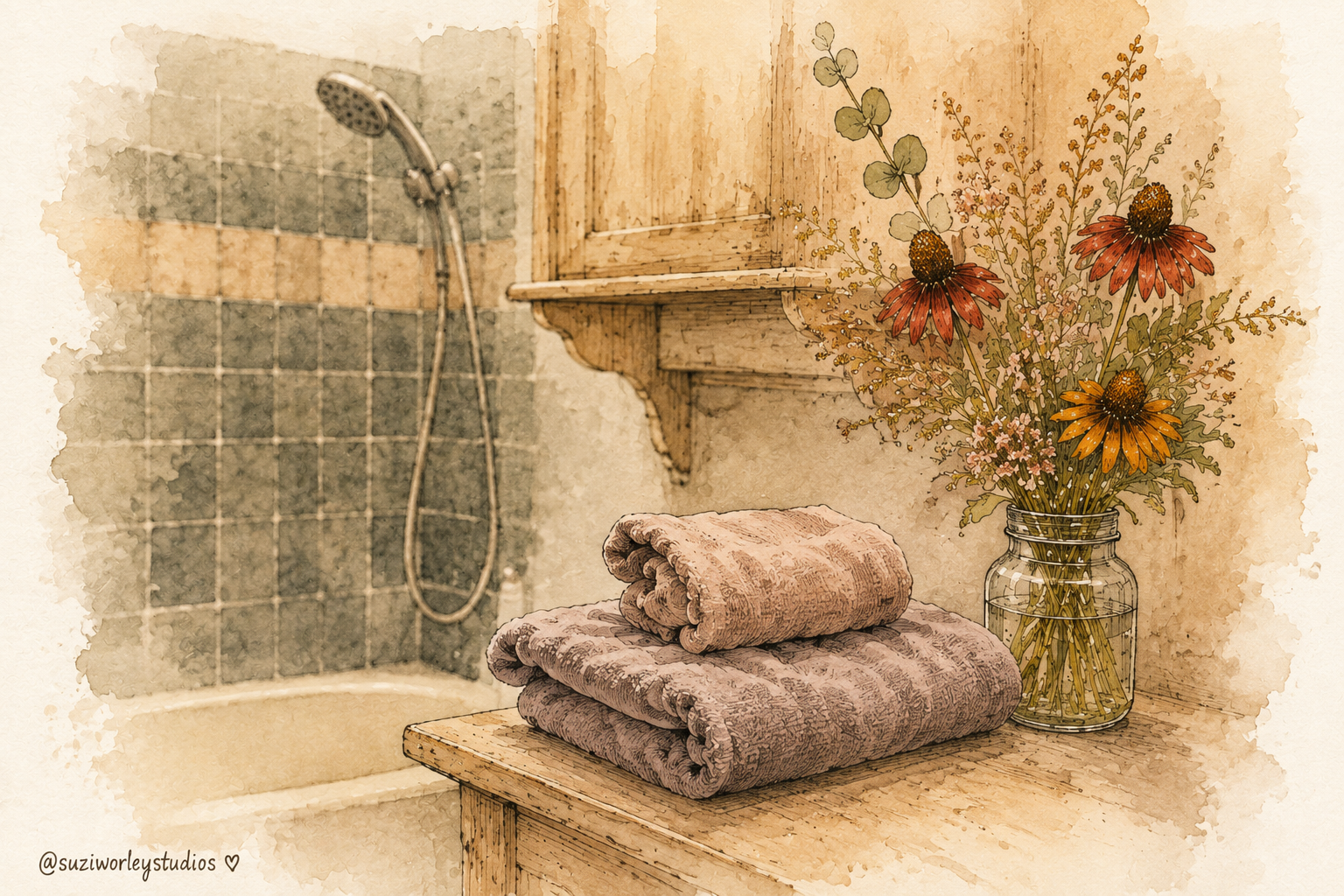
There were towels to fold, sheets to freshen, and all the little things we stop noticing when we live among them every day. I put fresh flowers in the bathroom, not because she expects them, but because I want her to feel that her arrival matters.
It is the same bathroom I recently upgraded so my mom could shower more safely. We added a new showerhead with a handheld shower wand: a small, practical change that brought joy and made a meaningful difference when movement is harder than it once was.
Now, folded towels and flowers sit near it.
Care and beauty. Necessity and welcome. Different expressions of the same quiet thought:
I made room for you here.
The work that rarely gets counted
Labor Day usually turns our attention toward jobs, the work we perform, the work that built our communities, and the people whose labor keeps life moving.
That work deserves to be recognized.
But I have also been thinking about the work that rarely appears on a résumé, invoice, or time sheet.
The work of remembering how someone takes her coffee.
Of moving an appointment so you can sit beside someone at another one.
Of installing a shower wand, changing the sheets, filling a water glass, or placing flowers in a room where no one asked for them.
It is the work of noticing what would make another person safer, more comfortable, or more at ease, and quietly taking care of it.
Much of that labor is invisible precisely because, when it is done well, all the other person feels is welcome.
They may never see the rearranged calendar, the list on the counter, or the thought that went into preparing a space. They simply arrive and feel that there is a place for them.
Making room asks something of us
We tend to speak about making room as though it is sentimental: open doors, extra chairs, a place at the table.
In reality, making room is wonderfully practical.
Something usually has to move.
We clear a drawer. Shift a schedule. Change a routine. Let something less important remain unfinished. We adapt a space that once worked because someone we love needs it to work differently now.
And sometimes the hardest room to make is not in our homes at all. It is in a conversation.
It is pausing long enough to hear the answer after asking, “How are you?” It is allowing someone else’s experience to take up space without immediately filling the silence with our own. It is loosening our grip on what we had planned so we can be present for what is actually happening.
That kind of welcome cannot be staged. People know when we have created space for their bodies but not their stories.
Love often looks practical
We like to imagine love in its grandest forms. But most days, love wears work clothes.
It checks the height of the shower wand. It keeps track of appointments. It washes the guest towels even though they were already clean. It notices the flowers outside and brings a few in.
There is nothing glamorous about much of it. Some of it is repetitive. Some of it is inconvenient. And some seasons require so much making room for others that we realize how little room we have left for ourselves.
Perhaps that is why the smallest gestures can feel so tender. They remind us that care does not always need to be dramatic to be deeply felt.
A practical change can preserve someone’s dignity.
A freshly prepared room can tell a friend she was anticipated, not merely accommodated.
A few flowers beside folded towels can turn a functional space into a welcome.
What will someone feel when they arrive?
I have spent much of my life thinking about how businesses make people feel. Before the message, the offer, or the strategy, there is an experience: Did I feel seen here? Did someone consider what I might need? Was there room for me?
Those questions matter well beyond marketing.
Our homes, businesses, communities, and relationships all communicate something about who is expected, and who has been considered.
Making room does not require a perfect house, an empty calendar, or elaborate hospitality. It may be as simple as pulling up another chair. It may mean changing something that has always been done one way because that way no longer serves the person standing in front of us.
It may mean choosing presence over polish.
My friend will not know everything that went into preparing for her visit. She does not need to. I hope she notices the flowers, but more than that, I hope she feels what they mean.
You were thought of before you arrived.
This Labor Day, I am grateful for the work that earns a paycheck, builds a business, or creates something tangible in the world. I am also grateful for the quieter work, the tending, adjusting, remembering, and welcoming that holds our lives together.
Perhaps the measure of a well-made life is not how much we manage to fit into it, but whether the people we love can find a place within it.
And perhaps making that place, one towel, one conversation, one small act of care at a time, is some of the most important work we will ever do.